Museum and Necropolis of Tarquinia: everything you need to know
Two places, one visit: the Monterozzi Necropolis with its original painted tombs and the National Archaeological Museum with the Winged Horses and detached frescoes. Here is how to plan it.
At a glance: two places, two parts of the day
- Monterozzi Etruscan Necropolis: painted tombs in the place where they were built, a UNESCO World Heritage Site since 2004.
- National Archaeological Museum, in Palazzo Vitelleschi (Piazza Cavour 1): the Winged Horses, sarcophagi, pottery and painted tombs detached and rebuilt.
- They are two separate sites: the necropolis is on the Monterozzi hill, the museum is in the heart of the old town.
The Monterozzi Etruscan Necropolis
The necropolis occupies the Monterozzi plateau, named after its many small earth mounds. It runs parallel to the Tyrrhenian coast, about six kilometres long and three wide, and is divided into localities: Calvario, Primi Archi, Secondi Archi, Scataglini and Doganaccia. Only the Calvario area is open to the public.
There are about six thousand tombs, around two hundred of them painted. The painting tradition runs from the Orientalising period, at the end of the 7th century BC, to the mid-1st century BC, in Republican times. Since 2004 the necropolis has been part of the UNESCO site «Etruscan Necropolises of Cerveteri and Tarquinia».
The painted tombs to know
The list of visitable tombs includes more than twenty painted chambers, among them:
- Tomb of the Leopards: a banquet with musicians, named after the two leopards on the pediment.
- Tomb of Hunting and Fishing: fishing and bird-hunting scenes in a lively, almost naturalistic landscape.
- Tomb of the Blue Demons: blue-skinned demons accompanying the dead into the afterlife.
- Tombs of the Flogging, the Bacchantes, the Jugglers, the Warrior, the Charons and many more.
- The tombs of the Triclinium, the Ship, the Olympics and the Chariots are among the most famous, but their frescoes were detached and are now in the Museum.
Which individual tombs are open can vary, so it is worth asking before you go.
Planning your visit to the necropolis
- Head for the Calvario area, the only one open.
- Wear comfortable shoes and, in the warm months, bring water and a hat: you walk outdoors on the plateau.
- Times and tickets change with the seasons and with tomb openings: check the Ministry of Culture's PACT portal or call the necropolis office, 0766 856308.
- A certified guide makes a real difference in understanding what you see: Roberto arranges one for guests of Il Butto.
The Tarquinia National Archaeological Museum
It is housed in Palazzo Vitelleschi, a 15th-century building put up between 1436 and 1439, at Piazza Cavour 1, in the heart of the old town (phone 0766 856036). It spreads over three floors:
- Ground floor: stone materials in chronological order, with sarcophagi from the mid-4th century BC. Room 1 holds the finest, some in Greek marble, belonging to Tarquinia's leading families.
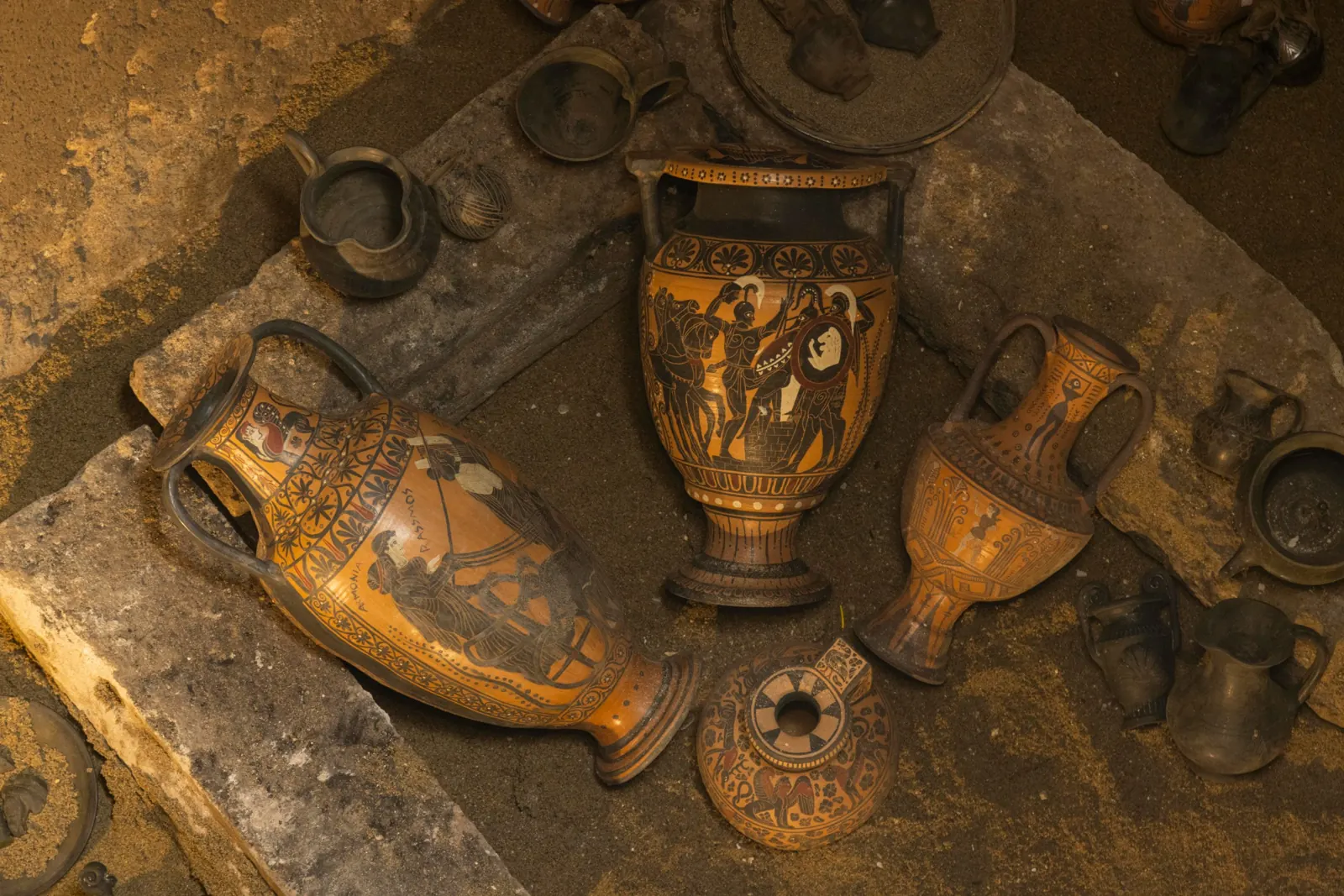
- First floor: pottery from the necropolis excavations, from Villanovan pieces (9th-8th century BC) to Orientalising objects with Phoenician and Egyptian imports, from Corinthian ware and bucchero to Attic black- and red-figure vases. Then bronze coins, granulated gold jewellery, mirrors and unguent containers, and in the last room the votive offerings from the Ara della Regina.
- Second floor: a square loggia with views over town and countryside and, in climate-controlled rooms, the painted tombs rebuilt with their detached frescoes. The Winged Horses are displayed in the Salone delle Armi.
Winged Horses and detached tombs: the museum's masterpieces
- The Winged Horses: a terracotta high relief of a pair of rearing winged horses yoked to a chariot, which decorated the Ara della Regina temple.
- Tomb of the Triclinium (c. 470-440 BC): found in 1830 and detached in 1949, it shows a funeral banquet with three couples, musicians and dancers.
- Tomb of the Ship (mid-5th century BC): found and detached in 1958, its wall shows a two-masted cargo ship and a harbour, a subject unique in Tarquinian painting.
- Tomb of the Olympics (c. 530-520 BC): funeral games, including a chariot race with a crash.
- Tomb of the Chariots (c. 490-480 BC): a frieze of funeral games, including the Etruscan «Phersu» game.
From 1950 to 1960 the Lerici Foundation uncovered many painted tombs: some frescoes were removed with the «strappo» technique to save them from destruction and are now kept in the museum. A tip: follow the route in order, starting from the last room of the first-floor balcony and then going up to the loggia.
Beyond the two sites: Ara della Regina and the old town
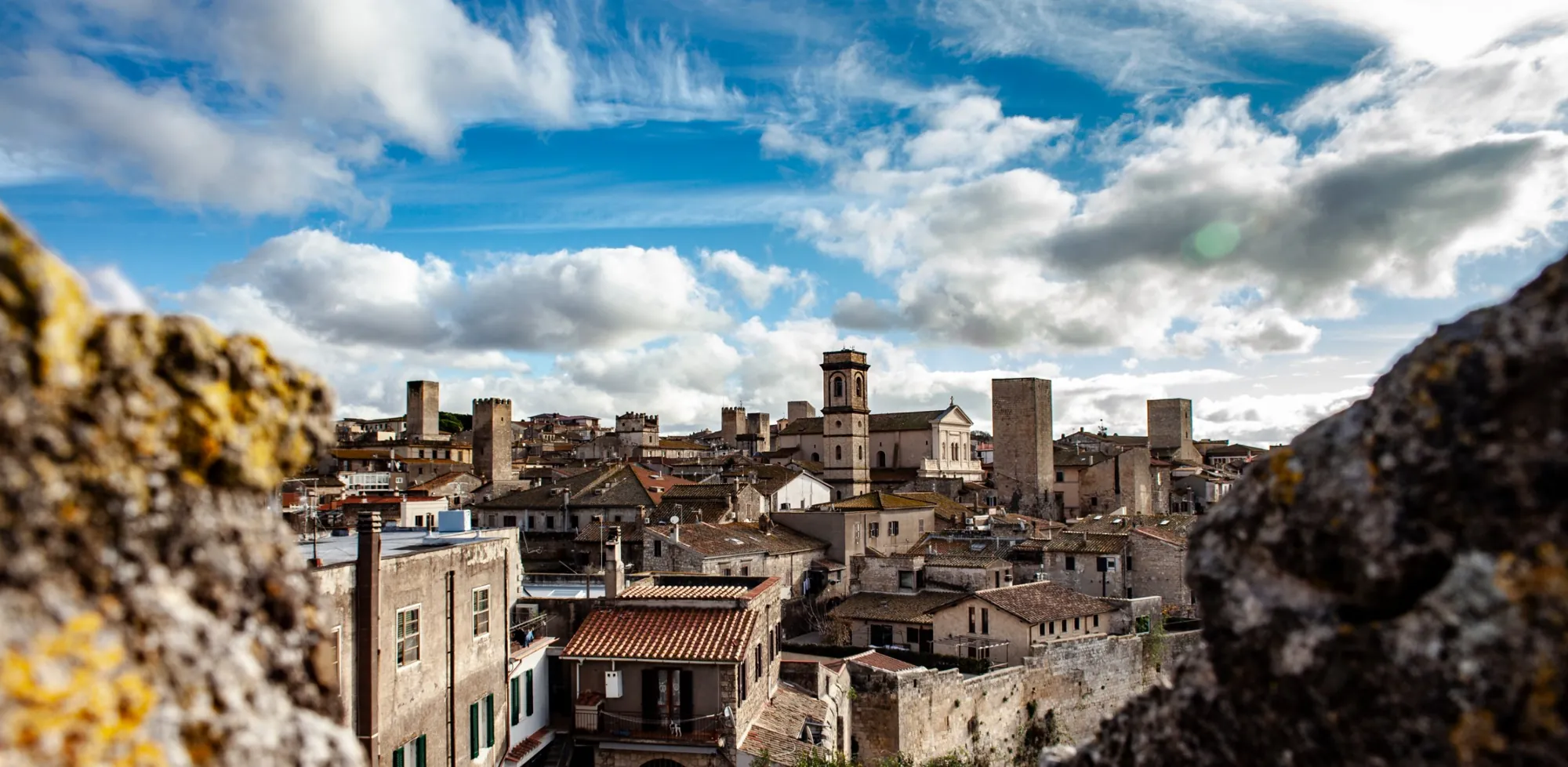
On the Civita plateau stood the Etruscan city of Tarchna, dominated by the Ara della Regina temple, the source of the Winged Horses: a quiet, panoramic archaeological area. The old town, with its towers, Romanesque churches and Piazza Cavour, can be walked in one evening.
A one- or two-day itinerary
- Morning: Monterozzi Necropolis (Calvario area).
- Lunch in the old town, then the afternoon at the Museum: Winged Horses, sarcophagi, detached tombs and the panoramic loggia.
- Evening: a stroll through the squares and dinner at one of the restaurants in the centre.
- Second day: Ara della Regina and the Civita, then a little sea at the Lido.
Sleep steps from the museum
Il Butto is a loft for two in Tarquinia's historic centre, at Via Venti Settembre 32: the Museum is on foot, the Necropolis a few minutes by car. And in the evening you come home to real Etruscan stones: a butto of Etruscan origin, visible through the glass floor, is waiting in your living room. Self check-in from 15:00, direct booking on WhatsApp.
Frequently asked questions
Are the Museum and the Necropolis in the same place?
No. The National Archaeological Museum is in Palazzo Vitelleschi, in Piazza Cavour, in the old town; the Monterozzi Necropolis is on the hill outside the centre, a few minutes by car.
How many painted tombs can you visit?
The list of visitable tombs includes more than twenty painted chambers in the Calvario area, but which individual tombs are open can vary: ask before you go.
Where are the Winged Horses?
In the National Archaeological Museum, in Palazzo Vitelleschi: they are displayed in the Salone delle Armi, on the second floor.
What is a «detached tomb»?
A tomb whose frescoes, discovered in the 1950s and 60s, were removed with the strappo technique to protect them; they are now rebuilt in rooms of the Museum, like the tombs of the Triclinium and the Ship.
Where can I find times and tickets?
Times and tickets vary: check the Ministry of Culture's PACT portal, or call the necropolis office (0766 856308) or the museum (0766 856036). Roberto can help you organise everything.
Where to stay near the Tarquinia Museum?
Il Butto, at Via Venti Settembre 32 in the historic centre: a loft for two with a real Etruscan butto under a glass floor, on foot from the Museum.
Keep reading